
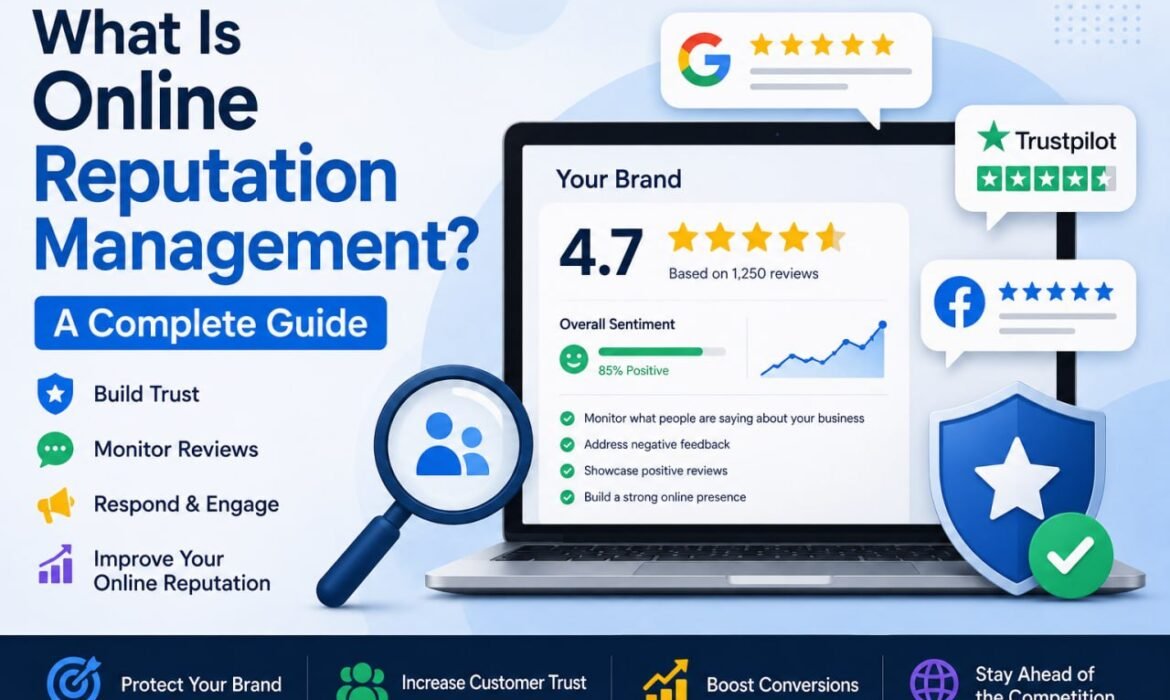
With today’s digital landscape, a company’s online reputation has a significant role in shaping the customers’ impression of the business. Before reaching out, buying from or booking a business, many customers will want to find reviews, ratings, customer feedback, and other information about the company.
That is why online reputation management (ORM) has become a crucial aspect of digital marketing nowadays. Positive online reputation helps to create trust, generate customers, and ensure growth. But negative reviews, unanswered complaints, or outdated information can drive away potential customers.
In this guide, we will give you a definition of online reputation management, tell you why it is important, and describe how businesses can manage their online reputation successfully.
What Is Online Reputation Management?
Online reputation management refers to monitoring, controlling, and optimizing the impression a person or a business leaves online.
The online reputation of a business can cover such aspects as:
- Google reviews
- Reviews on Trustpilot
- Reviews on Yelp
- Tripadvisor reviews
- Feedbacks and comments on social media
- Listings in directories and other online sources
- Complaints from customers
- Search engine results
- Blog posts and news
- Customer feedbacks
- Business data in online sources
But the aim of reputation management is not only in the removal of negative information. Effective ORM consists of creating a trustworthy online image, responding to feedback professionally, correcting inaccurate information, and encouraging satisfied customers to leave their opinions.
Why Is Online Reputation Important?
Many customers do research on a company before making a decision about purchasing something from them. For example, if two companies offer the same services, but one has a rich online profile with recent reviews and professional feedback, while the other doesn’t even reply to customer complaints, people will choose the company with a positive online reputation.
Positive online reputation helps the businesses to:
- Create trust among customers
- Increase credibility
- Get more inquiries
- Gain customer confidence
- Boost the brand awareness
- Build better relations with customers
- Improve the local searchability
- Attract more returning customers
That is why online reputation management of a business is supposed to be a consistent process, not a one-time marketing campaign.
How Does Reputation Management Work?
To have an effective ORM strategy, businesses usually follow several steps.
1. Monitoring the Online Reputation
The first step is finding out what others say about the business. Businesses need to monitor various online sources from which they can get customers’ feedback. Such sources can include Google, Trustpilot, Yelp, Tripadvisor, Facebook, industry-related directories, and any other platforms for reviews. By monitoring such sources, businesses can quickly understand whether the feedback about them is negative or positive.
2. Replying to Customer Reviews
Replying to customer feedback shows that a business cares about customers’ opinions. Positive reviews can get just a quick “thank you” for a compliment. And negative reviews should get a professional and polite reply. A good reply usually:
- Acknowledges the concern of a customer
- Remains professional
- Doesn’t start an argument
- Suggests investigating the problem
- Gives a way to contact the company regarding the problem
Such a reply will also show to future customers that the company cares about their feedback.
3. Encouraging the Customers to Leave Feedback
Businesses should make it easy for customers to leave their impressions about the product or the service. A company can ask customers for feedback after their purchase, finished project, appointment, etc. These feedback requests can be sent via emails, SMS, receipts, or other means of communication. The main thing is encouraging the customers to leave genuine feedback, not manipulating with ratings and creating fake reviews. Genuine feedback can bring value both for the business and potential customers.
4. Keeping Information About the Business up-to-date
Online reputation of a business is not limited to customer reviews. Wrong phone number, outdated address, inconsistent business name, or any other inaccurate data can create confusion and decrease customer confidence in the company. It is necessary for the businesses to check the data about themselves in online sources frequently to keep it consistent and updated.
5. Creating Valuable Content
Publication of valuable content can help businesses to gain authority and provide customers with reliable information.
Such content can include:
- Educational blog posts
- Frequently asked questions and answers
- Guides for the customers
- Other resources for the customers
- Case studies
- Industry insights
Consistent content publication can also help to build a business presence in search engine results.
Online Reputation Management and SEO
There is a relation between online reputation and SEO, especially for those businesses that rely on local customers. When people look for the company in the search engines, they can find the website of the business, Google Business Profile, various review websites, its pages on social networks, directories, and other results. Well-managed online reputation provides people with more information to evaluate. Customer feedback can also play a role in the experience that the customers have of a business when looking through the search results. But a business shouldn’t concentrate only on the rating of reviews. The quality, relevance, freshness, and authenticity of feedbacks matter too. That is why local reputation management can be combined with local SEO, content marketing, and Google Business Profile optimization.
How to Deal With Negative Reviews
It is impossible to avoid negative feedback about a business. The aim should not be in removing all negative comments. It is better to treat negative feedback as a chance to learn about customer concerns and fix problems in services. When replying to negative feedback:
- Don’t get emotional
- Acknowledge the problem
- Give context if it is possible (without attacking the reviewer)
- Suggest a solution if it is possible
- Move sensitive topics into private conversation
A professional reply shows good customer service even if the feedback itself is negative.
Common Mistakes in Online Reputation Management
Sometimes, businesses damage their reputations by taking wrong actions when dealing with reviews.
Common mistakes include:
- Ignoring negative reviews
- Reacting to the reviews emotionally
- Starting public discussions with customers
- Giving generic replies to all reviews
- Allowing inaccurate information about the business stay online
- Focusing only on the rating of the reviews
- Creating fake customer feedbacks
- Not monitoring important online sources
- Not considering customer complaints that occur again
Effective reputation management should include transparency, consistency, good customer service, and genuine feedbacks.
How to Build a Long-Term Reputation Strategy
Effective ORM works best when it becomes a part of a company’s marketing process.
The basic reputation strategy can include the following points:
- Identify the review websites important for your industry.
- Regularly monitor customers’ feedbacks.
- Give professional replies to the feedbacks.
- Encourage satisfied customers to give honest feedbacks.
- Keep business listings updated.
- Answer recurring customer complaints.
- Create valuable and trustworthy content.
- Monitor the results for your brand in search engines.
- Review the performance of your reputation management regularly.
- Improve customer experience constantly.
The main thing about this process is the customer experience itself. When the customers have a good experience with the business, they are more likely to leave their positive feedbacks.
Conclusion
Online reputation management is an essential part of modern digital marketing. People have much more information than before, and their opinion of the business is strongly influenced by the online reviews.
The successful online reputation management strategy includes monitoring of reviews, giving professional replies to them, keeping business information up-to-date, getting genuine customer feedbacks, publishing valuable content, and good customer service. And instead of hiding criticisms from the customers, businesses should use reputation management as a long-term strategy to build trust and improve their relations with the customers.